Insulin that
listens.
An enzyme-responsive oral platform for biologics. Lead programme: Type 1 diabetes. Next: autoimmune prevention and nucleic-acid therapeutics.
The gap
Today's insulin dosing is manual. A healthy pancreas is not.
People with Type 1 diabetes inject insulin between three and six times a day, every day, and still spend roughly half their waking hours outside the glycaemic range a healthy pancreas would hold them in. Subcutaneous delivery cannot read glucose, cannot reach the liver first, and carries a persistent risk of hypoglycaemia — the rate-limiting toxicity of the entire category.
The opportunity is not better injection. It is delivery that behaves like the organ it replaces.
The platform
A 20 nm carrier that mimics the natural first-pass hepatic exposure of pancreatic insulin.
Insulin is bound to a silver-sulfide quantum dot, coated in a protective, controlled-release polymer, and distributed like your body's own insulin.
Bind insulin to a quantum dot.
Insulin is bound to a 5-nanometre silver sulfide quantum dot — a carrier small enough to be taken up from the gut and inert enough not to provoke haematological response.
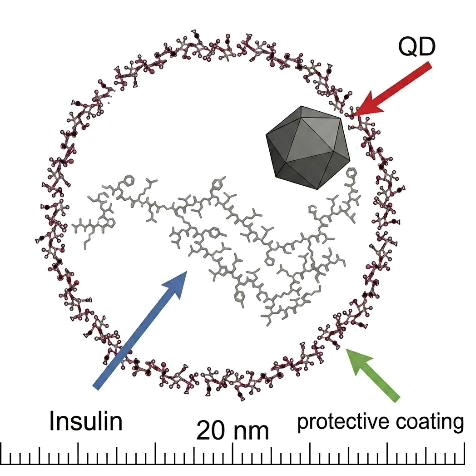
Coat it to sense food.
A chitosan-glucose polymer makes the particle both pH-responsive — insoluble in the acidic stomach, soluble at neutral duodenal pH — and enzyme-responsive, so endogenous glucosidase releases insulin when these enzymes are degrading a meal.
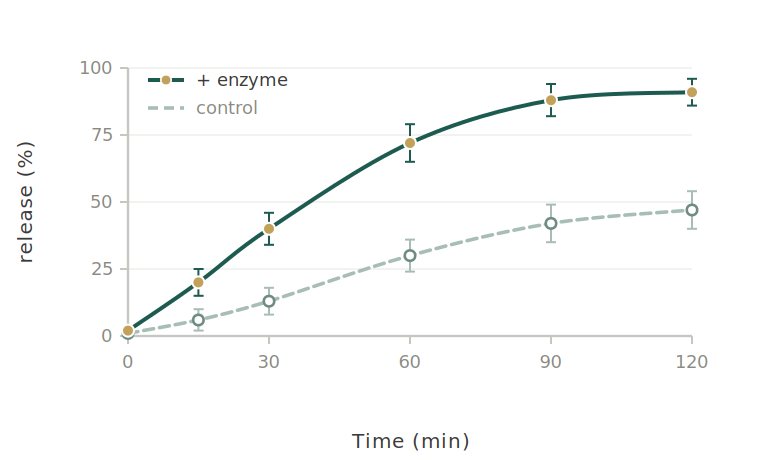
Pass the GI tract.
The particle is sized to cross the enterocytes of the duodenum, delivering insulin to the portal vein — the natural route subcutaneous injection cannot take.
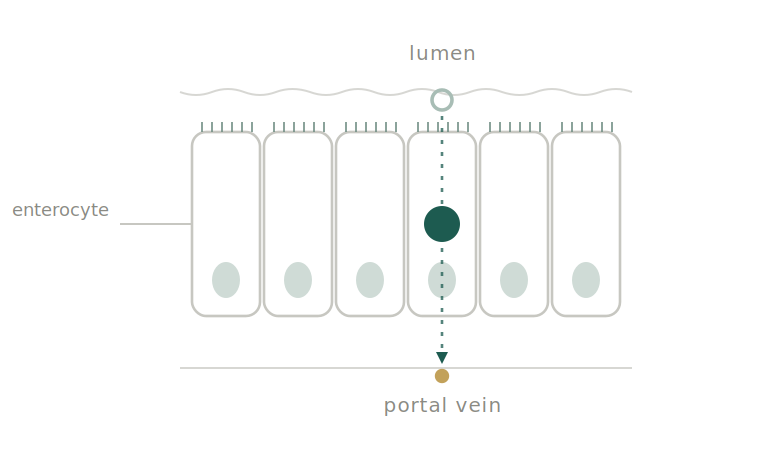
"Published in Nature Nanotechnology, 2024. Dose-response effect in three species."
The science
Four findings, on the record.
- 01
Dose-dependent glucose reduction in diabetic rodents without hypoglycaemia or weight gain.
Hunt et al., Nature Nanotechnology, 2024 - 02
Dose-dependent glucose reduction in non-diabetic baboons. No haematological or biochemical toxicity in any species tested.
Hunt et al., Nature Nanotechnology, 2024 - 03
60% of an oral dose reaches the liver within 30 minutes via the silver-sulfide QD platform.
Hunt et al., ACS Nano, 2020 - 04
QD conjugation increases oral bioavailability of small-molecule payloads by 25× to 100× with selective liver targeting.
Hunt et al., ACS Nano, 2021
Pipeline
Oral insulin is the validation event.
The platforms are the company.
Multiple delivery chassis. Peptide biologics, then antigen-tolerogenic biologics, then nucleic-acid therapeutics.
EA-1 · Oral insulin
Type 1 diabetes · lead programmeEA-2 · Autoimmune prevention
Type 1 diabetes onset · tolerogenicEA-3 · Nucleic-acid therapeutics
Haemophilia A · mRNAPeanut allergy
Platform extension · under assessmentThree parallel directions, multiple delivery chassis — each one builds the next.
Removing the injection requirement from a category that has none.
The EA-1 chassis generalises to other peptides and proteins, the largest unmet pharmacy in modern medicine.
CHASSIS · EA-1Tolerogenic delivery to hepatic antigen-presenting cells.
EA-2 is in preclinical investigation in Type 1 diabetes. Peanut allergy is under commercial assessment as a platform extension.
PRECLINICAL · EA-2Oral siRNA, miRNA, and mRNA delivery.
Internal work extends the platform to RNA payloads, opening the door to liver-targeted gene modulation without lipid-nanoparticle injection.
INTERNAL · DISCOVERYStrategic partnership with Ab Initio.
Formulation scale-up under GMP. Executed May 2024 — before the IND-enabling package, not after.
EXECUTED · MAY 2024Progress
Thirty years of liver pharmacology. A decade of nanotechnology translation. Three years as a company.
Dates recorded where public and verified. Forward milestones framed without commitment to date.
- ~ 1995–
~30 years of foundational liver research at the University of Sydney and the ANZAC Research Institute, led by Professors Le Couteur and Cogger.
- 2014
Original IP agreement with the Medical Research Institute.
- 2019
First invention disclosure: oral insulin via quantum dots.
- 2020
ACS Nano publication establishes silver-sulfide QD platform liver targeting.
- 2021
ACS Nano publication extends the platform to small-molecule bioavailability.
- 2022
Second invention disclosure: platform extension.
- 2023
Endo Axiom founded. Proto Axiom partnership.
- 2024
Nature Nanotechnology publication. Ab Initio Pharma manufacturing partnership.
- 2025
NOD-mouse autoimmune programme underway.
- 2026
HREC approval and clinical trial in preparation.
Team
Co-architects of the modern understanding of the liver, the chemists who taught it to carry insulin, and the operators bringing it to patients.
Three founders. Three directors and advisors. One operating company at the edge of thirty years of Australian liver pharmacology.
-

A/Prof Nicholas Hunt
Co-founder & CEO
Associate Professor, School of Medical Science, University of Sydney. Lead author on the Nature Nanotechnology 2024 oral-insulin paper and the ACS Nano 2020 / 2021 papers that established the QD platform.
-

Prof. David Le Couteur AO
Co-founder & Clinical Advisor
Gerontologist and clinical pharmacologist, University of Sydney. Co-architect with Cogger of the modern understanding of the liver sieve. Officer of the Order of Australia.
-

Prof. Victoria Cogger
Co-founder & Scientific Advisor
Executive Director, Sydney Biomedical Accelerator. Foundational work on liver sinusoidal endothelial cells and how the liver senses and takes up pharmaceuticals.
-

Lawrence Gozlan
Chairman
Chief Investment Officer, Scientia Capital. Previously ran the largest biotechnology investment portfolio in Australia at Queensland Investment Corporation.
-
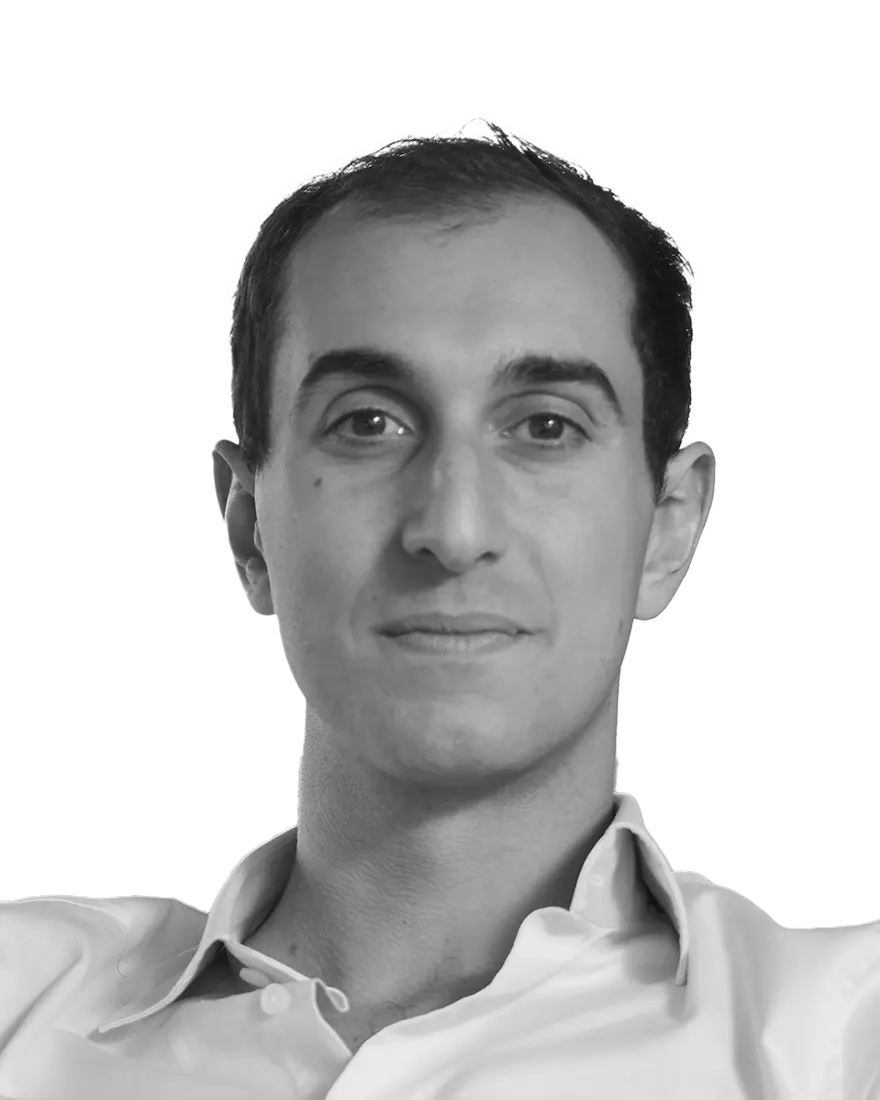
Anthony Liveris
Director
CEO, Proto Axiom. Co-founder of Applecart (NYC, US$100M from Blackstone Growth). Former roles with PM Turnbull, the Tony Blair Institute, and US presidential campaigns.
-

Samantha Guthrie
Clinical Operations
20+ years in clinical trial management, including phase 1 studies at Johnson & Johnson. Leads clinical trial operations with CRO partners Data Pharma and CMAX Clinical Research.
-

Lindsay Wu, PhD
Scientific Advisor
Head of the Laboratory for Ageing Research at UNSW Sydney. NHMRC Research Fellow. Background in molecular biology, biochemistry, and drug development.
University of Sydney · Sydney Local Health District · ANZAC Research Institute · Charles Perkins Centre · Sydney Nano Institute · Concord Clinical School.
Parent company
Endo Axiom is the first company incubated by Proto Axiom.
Proto Axiom is an Australian company-creator building four CSL-scale therapeutics businesses over twenty years. It takes the largest equity stakes, leads from seed, and contributes operational and scientific capacity through to commercial inflection.
Endo Axiom is the flagship of that thesis.
protoaxiom.comContact